
Which Home Business Fits You? The 3 Types of Mompreneurs

You’ve read the lists. “50 Business Ideas for Stay-at-Home Moms.” “101 Ways to Make Money From Home.” You’ve saved them all. Somewhere in your camera roll, there’s a screenshot of a candle business you will never start.
The problem isn’t a lack of ideas. It’s that most lists of business ideas for stay-at-home moms skip the most important question: which one fits you? Not your neighbor or that woman on Instagram with the spotless kitchen. You, with your skills, your history, and your 22-minute nap windows.
After years of building my own business around babies (and coaching moms to do the same), I’ve noticed something. Most moms fall into one of three paths. Once you know yours, the right business becomes much easier to spot.
In this post, we’ll cover:
- The three types of mompreneurs: Remixer, Evolver, and Trailblazer
- The business paths that fit each one best
- A practical 15-minute first step for each type that you can take today
By the end, you’ll know which path sounds like you and exactly what to do next.

Why Generic Business Idea Lists Leave You Stuck
Business idea lists aren’t bad; they’re just backwards.
They start with the business and hope you fit it. But you don’t start from zero. You start with a past career, skills, contacts, and a very specific amount of free time (spoiler: not much).
A former accountant and a mom who’s never held an office job shouldn’t get the same advice. One already has people who’d hire her. The other needs a different route to her first client. Both can build a real business. They just start in different places.
That’s why I sort moms by what’s changing, not by what’s trendy:
- Are you keeping your skills but serving someone new?
- Are you staying in your field but changing how you work?
- Or are you building something completely different?
Your answer points to your path. And your path tells you where your first paying client is most likely to come from.
The 3 Types of Mompreneurs at a Glance
Here’s the quick version before we dig in:
| Path | What she’s doing | Where her first client likely comes from |
|---|---|---|
| Remixer | Keeps her old skills, finds a new audience | Past colleagues, industry peers, agencies |
| Evolver | Stays in her field, changes her role and how she works | Her former employer and existing contacts |
| Trailblazer | Builds something new while earning early | Small paid projects, agency subcontracting, freelance platforms |
You might see yourself in one right away. You might see a little of yourself in two. Both are normal. Let’s look at each one.
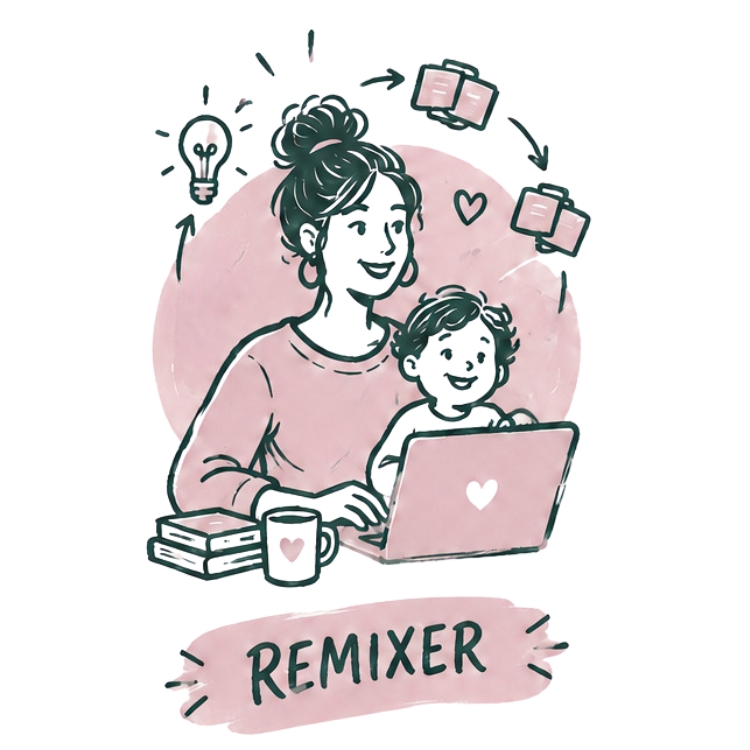
Type 1: The Remixer
The Remixer takes skills she already has and points them at a new audience.
She isn’t starting over. She’s taking what she knows and remixing it for people who need it in a different way. Same skills. New crowd.
What a Remixer looks like
- A former HR recruiter who now writes resumes for moms going back to work
- A nurse who writes health content for wellness brands
- A corporate accountant who does bookkeeping for small creative businesses
- A teacher who designs lesson plans for homeschool families
Notice the pattern? The skill stays. The audience shifts. Often, it shifts toward people she relates to now, like other moms, small business owners, or a cause she cares about.
Business paths that fit a Remixer
- A niche freelance service. Your old skill, packaged for a specific group.
- Agency subcontracting. Agencies in your old industry often need overflow help, and they already speak your language.
- Consulting or coaching. If you’ve got deep experience, people may pay to learn from it.
- A digital product (later). Templates or guides built from what you already know. Great as a second step, not usually the first.
Your first message to people sounds something like this: “I’m doing [old skill] for [new audience] now.” Simple. Clear. No reinvention required.
Your 15-minute first step
Set a timer and do this:
- Write one sentence: “I help [new audience] with [skill you already have].” Don’t overthink it. You can change it later.
- List five people who’ve seen your work before. Old coworkers, a former boss, an industry friend.
- Circle the one most likely to know someone in your new audience.
That’s it. You now have an offer idea and a warm lead. Not bad for the length of one episode of Bluey.
Quick takeaway: If you love your skills but want a fresh audience, you’re probably a Remixer. Your experience is your head start, so use it.
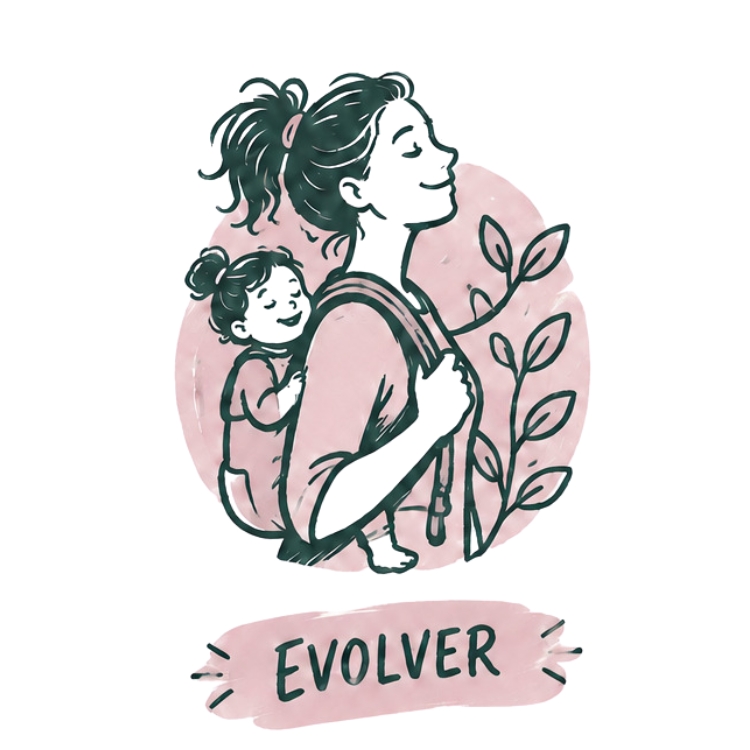
Type 2: The Evolver
The Evolver stays in her field but changes her role and how she works.
She likes what she does. She just doesn’t want to do it in a cubicle from 8 to 5 anymore. So instead of leaving her industry, she evolves inside it. Employee becomes contractor. Manager becomes consultant. Full-time becomes “a few hours a week, on my terms.”
This is honestly where my own story fits. Years ago, my remote marketing job ended when the company wanted someone in person. I kept doing SEO and copywriting, just as a freelancer. When I officially started my business in 2013, my first clients were former colleagues. Some of them are still clients today. That’s the Evolver path in a nutshell.
What an Evolver looks like
- A marketing manager who becomes a freelance marketing consultant
- An in-house graphic designer who takes contract design work
- A paralegal who works on a contract basis for a few law firms
- A project manager who steps into a part-time, fractional role
Business paths that fit an Evolver
- Contract or freelance work. The same work you did in-house, billed by the project or the hour.
- Retainers. Ongoing monthly work for a client or two. Very nice for predictable income.
- Fractional roles. Part-time leadership or specialist work for companies that can’t hire full-time.
- Consulting. Advising on what you used to do yourself.
The Evolver has a big advantage: people already trust her. Her first client is often her old employer or someone in her current network. Her first message sounds like: “I’m available as a contractor for what I used to do in-house.”
Your 15-minute first step
- Write down five tasks you did in your old job that someone still needs done. Be specific. “Wrote the monthly newsletter” beats “marketing stuff.”
- Pick the one you’d happily do again (and could do during nap time).
- Draft a short message to one former boss or coworker: “I’m now taking contract work for [task]. If you ever need help, I’d love to chat.”
You don’t have to send it today. But you’ll be surprised how often a message like that gets a “Wait, really? We need this.”
Quick takeaway: If you like your field but not your old schedule, you’re probably an Evolver. Your network is your fastest path to a first client.

Type 3: The Trailblazer
The Trailblazer builds something new.
Maybe she never loved her old career. Maybe she’s been home for years and her old field has changed. Or maybe she’s always had a different dream tugging at her. Whatever the reason, she’s not remixing or evolving. She’s starting a new path.
I’m going to be totally honest with you: this path usually takes longer. You’re building skills, proof, and connections at the same time. That’s not a reason to avoid it. It’s just a reason to be smart about it. The Trailblazer’s secret is to earn early. Don’t spend a year “getting ready.” Get paid for small things while you grow.
What a Trailblazer looks like
- A former retail manager who becomes a virtual assistant
- A stay-at-home mom of six years who starts managing Pinterest accounts for bloggers
- A former dental hygienist who learns copywriting and takes small writing projects
- A mom who loves organizing and launches a service setting up digital systems for small businesses
Business paths that fit a Trailblazer
- Small paid projects. Short, simple jobs that build skills and proof fast.
- Agency subcontracting. Agencies need extra hands, and it’s a great way to learn while earning.
- Freelance platforms. Sites like Upwork can help you land early clients while your network grows.
- Beginner-friendly services. Virtual assistance, social media support, Pinterest management, and basic content writing are all solid starting points.
Your first message is refreshingly honest: “I’m new to this and offering a first project at a starter rate.” No faking it. No pretending you’ve done this for ten years. People respect that.
Your 15-minute first step
- Pick one beginner-friendly service that sounds fun to you. Just one. You can try others later.
- List three specific tasks you could do for a client this week. Example: “Schedule 10 pins,” “Clean up an inbox,” “Write a product description.”
- Choose one free sample you could create to show your work. A mock social post, a sample blog intro, or a cleaned-up template.
Now you’ve got a service, a task list, and a plan for proof. That’s more than most people have after three months of “researching.”
Quick takeaway: If you want something totally new, you’re probably a Trailblazer. Start small, earn early, and let real projects build your confidence.
Not Sure Which Type You Are?
Totally fair. Lots of moms see themselves in more than one path. Here’s a quick gut check:
- You’re likely a Remixer if you love your skills but feel ready to serve different people.
- You’re likely an Evolver if you’d happily do your old job again, just with fewer hours and no commute.
- You’re likely a Trailblazer if the thought of your old career makes you want to take a very long nap.
Your Hours Matter as Much as Your Path
Here’s the part most work from home mom business ideas leave out: time.
Your path tells you what to build. Your weekly hours tell you how big to build it. And “how many hours do I have?” deserves an honest answer, not a wishful one.
Here’s a rough guide:
- About 4–5 hours a week: Stick with async, project-based, or productized work. Think one-time projects with clear deliverables.
- About 7–10 hours a week: Productized services plus one or two small retainers can work well.
- About 12–15 hours a week: Retainers, fractional roles, and consulting become realistic.
If you’ve got a newborn and a nap schedule that changes every Tuesday, start on the smaller end. There’s no prize for burning out first. Ask me how I know.
For what it’s worth, after my first son was born in 2019, I cut my work week to 15–20 hours. That’s what happened for me, and results vary a lot by field, network, and season. But the schedule itself has now lasted through two babies. A business that fits your real week will always beat one that only works on paper.
Common Mistakes When Choosing a Home Business
A few traps I see all the time:
- Picking the “hot” business instead of your business. Trends change. Your skills and network stick around.
- Ignoring your warm contacts. Your first client often already knows you. Don’t skip them because reaching out feels awkward.
- Building everything before testing anything. A logo is not a business. A paying client is.
- Choosing a 40-hour business for a 10-hour week. Flexible shouldn’t mean “always on.”
- Thinking you need to be an expert. You just need to be a few steps ahead of the person you’re helping.
Start with who you are, who you know, and how much time you have. Everything else can come later.
Find Your Path in a Few Minutes
You don’t need another list of business ideas for stay-at-home moms. You need to know which one fits the mom you are right now.
Remixers use their skills for a new audience. Evolvers stay in their field and change how they work. Trailblazers build something new and earn early. Each path is real. Each path works. And each one starts with a small, doable first step.
So, which one are you?
If you’re still not sure, I made something to help. The free Mompreneur Match Quiz shows you whether you’re a Remixer, Evolver, or Trailblazer. It also helps you see how many hours you realistically have to work with. It takes just a few minutes, and you can do it with a baby on your lap. (I tested that part personally.)
Loading the quiz… If this message stays, the quiz code did not run.