
The Difference Between Educational Content & Content That Converts

You’ve probably heard that your content should provide value. And yes, it should. But here’s where things get a little tricky: educational content and content that converts aren’t necessarily the same thing.
You can write a genuinely helpful blogpost, teach your audience something new, and still have almost no one take the next step with your business. Why? Because teaching and converting have two different jobs.

Educational Content Builds Trust
Educational content is exactly what it sounds like: content designed to help your audience learn something. It might answer a question they’ve been Googling, explain how something works, walk them through a process, or help them avoid a common mistake.
For example, if you’re a web designer, you might write a post called “5 Signs Your Website Needs a Redesign.” That’s useful. It helps your reader understand a problem they may not have realized they had. And that matters.
Educational content helps establish your expertise. It shows potential customers that you know what you’re talking about and that you’re willing to help before asking them to buy anything.
But there’s a catch. Being helpful doesn’t automatically make someone a customer.
Content That Converts Goes One Step Further
Content that converts still educates, but it also connects what the reader just learned to a solution. It answers the question: “Now that I know this, what should I do next?”
Let’s go back to the website redesign example. You could end the post after explaining the five signs. Your reader learns something, nods along, and closes the tab. Or, you could connect the dots.
Maybe their website is outdated, difficult to navigate, and not generating leads. Now they understand the problem. Your content can naturally explain how a strategic website redesign can solve those issues and invite them to learn more about your services.
That’s the difference. The content isn’t suddenly becoming “salesy.” It’s simply giving the reader a logical next step.

The Best Content Does Both
Here’s the good news: you don’t have to choose between educational content and content that converts. Your best content should do both.
Think of it this way:
Education: “Here’s what’s happening and why it matters.”
Conversion: “Here’s what you can do about it.”
A strong piece of content takes your reader from point A to point B. They start with a question, frustration, or problem. They finish with a better understanding of what’s going on – and ideally, a clear idea of what to do next.
That next step might be downloading a resource, joining your email list, booking a consultation, reading another blogpost, or checking out one of your services. It doesn’t always have to be “Buy now.”
Look at Your CTA
One of the easiest ways to tell whether your content has conversion potential is to look at the call to action.
What are you asking your reader to do when they finish? If the answer is nothing, you may be leaving an opportunity on the table. And no, every blogpost doesn’t need a giant sales pitch at the bottom.
Instead, think about what would make sense for that particular reader at that particular point in their journey. Someone reading a beginner-level educational post probably isn’t ready to jump straight into your highest-priced service. But they might be ready to download your free guide or read a related post. Meet them where they are.
Your content has a job beyond filling up your blog. It should attract the right people, answer their questions, build trust, and help them understand why your solution may be the right fit.
Educational content gets people in the door. Conversion-focused content helps them figure out where to go next. And when you combine the two, your blog becomes more than a collection of helpful articles. It becomes part of your sales process – working quietly in the background to educate, build trust, and move the right readers closer to becoming customers.
So before you hit publish on your next blogpost, ask yourself: What will my reader learn from this?
Then ask the more important question:
What do I want them to do with that information? That second question is where the conversion happens.
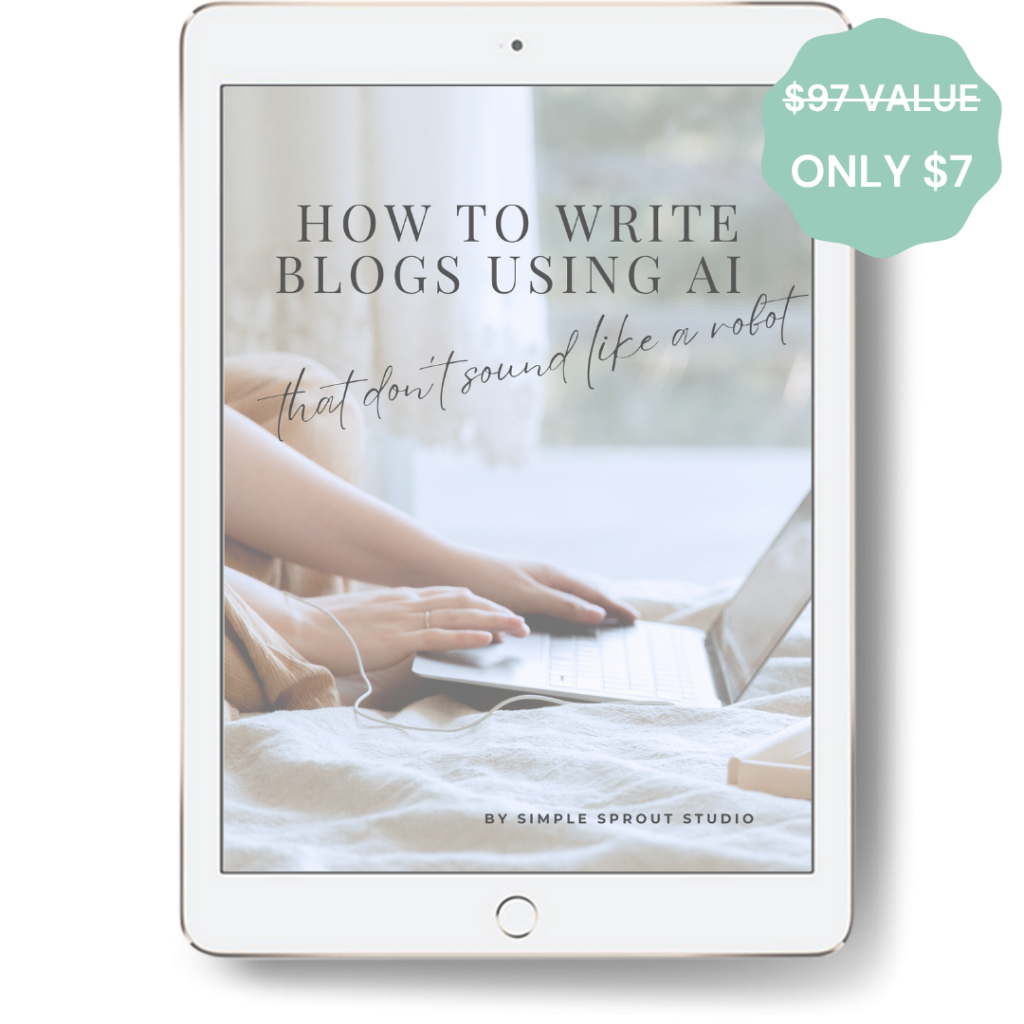
Ready to say goodbye to boring, robotic blogposts?
You don’t have to figure this out one painful edit at a time. There’s a faster way.
How to Write Blogs Using AI That Don’t Sound Like a Robot hands you the exact system for turning bland AI drafts into posts that feel 100% you. For just $7, you’ll get:
▷ The 4-Phase System: A simple, step-by-step process from brainstorming to final edit, so you never stare at a robotic draft wondering where to start.
▷ Plug-and-Play AI Prompts: The exact prompts that generate stronger first drafts and save you hours of rewriting.
▷ The Human-Touch Checklist: Spot and replace obvious AI phrases, add your brand voice, and make sure every post sounds authentic.
Write smarter. Sound human. Grow your blog, one genuinely helpful post at a time.
ready for more?
We’ve got you covered…and we’ll keep it simple.
Every week, we’ll pop in your inbox with awesome SEO and blogging tips made easy.