
Your Marketing Isn’t Working Together: How to Build a Strategy Instead of Juggling Tactics

You’re posting on social media, trying to keep up with blogging, sending the occasional newsletter, and making updates to your website when you can squeeze them in. You might even be experimenting with AI tools to speed things up.
So why does marketing still feel so hard?
For many CEOs, the problem isn’t a lack of effort. It’s that all these marketing activities are happening separately, without a clear plan connecting them. You’re checking things off your to-do list, but you’re not always sure what those tasks are doing for your business.
The answer isn’t necessarily to do more. It might be time to look at how your marketing works together.

Stop Treating Every Marketing Task as a Separate Project
It’s easy to look at marketing as a collection of unrelated responsibilities. Your blog needs a new post. Your email list needs attention. Your social media accounts need fresh content. And your website? Well, there’s always something to update.
When each task has its own deadline and purpose, it’s hard to see the bigger picture.
Instead, think about how these pieces can support one another. A helpful blogpost can answer a question your ideal client is already asking. That post can become a newsletter topic and provide several ideas for social media content. Your social posts can then direct people back to your website, where they can learn more about working with you.
One useful idea can go much further than a single published post. You won’t constantly start from scratch, and your audience will have more opportunities to connect with your message.
Start With What You Want Your Marketing to Accomplish
Before you add another platform or commit to a new content schedule, take a step back.
What do you actually need your marketing to do right now?
Maybe you need more qualified leads. Perhaps people are visiting your website but aren’t reaching out. Or maybe potential clients don’t fully understand what makes your services different.
These are three different problems, and they don’t necessarily call for the same solution.
If people aren’t finding you online, start by improving your SEO and creating useful content. If they’re finding you but not taking the next step, your website messaging, calls to action, or service pages may need attention.
Your marketing strategy should reflect the problem you’re trying to solve, not simply the platforms everyone says you should be using. Once you know your priority, it’s much easier to decide where your time and energy belong.

Choose Marketing Channels That Make Sense for Your Business
You don’t need to be everywhere. You need to show up where your audience is looking for information and where you can realistically maintain a presence.
For a service-based business, that might mean prioritizing SEO and blogging to attract people searching for answers, then using email to build relationships with those who want to hear from you regularly.
Social media can support that effort by sharing useful insights and helping people get familiar with your brand. The important part is giving each channel a job.
Your blog might help new people discover you. Your newsletter might keep you connected with subscribers. Your service pages should make it clear how you can help and what someone should do next.
When every channel serves a purpose, you’re making decisions based on your business goals instead of chasing every new marketing trend.
Build a Content Plan You Can Actually Maintain
Here’s where things can get easier. Rather than brainstorming separate ideas for every platform, choose a few topics that connect directly to your services and your audience’s questions.
Let’s say you’re a consultant who helps small business owners improve their operations. You could publish a blogpost about common workflow problems, expand on one of those points in your newsletter, and share a practical tip on social media.
Each piece offers something useful, but they all reinforce the same general message. You can also plan content around your business priorities. If you’re promoting a particular service, your next few blogposts, emails, and social updates can help your audience understand the problem that service solves.
You don’t need an elaborate content calendar to make this work. A simple plan with a clear topic, purpose, and next step is a perfectly good starting point.
Review What’s Working Before Adding More
Marketing isn’t something you set up once and never revisit. But reviewing your results doesn’t have to mean spending hours buried in analytics.
Look at a few measures that connect to your goals. Are your blogposts bringing relevant visitors to your website? Are people clicking through from your emails? Are qualified inquiries coming in? Which topics seem to generate meaningful conversations?
Use those answers to decide what deserves more attention and what might need adjusting. You may discover that one channel is doing more for your business than you realized. Or you might find that you’re spending hours on an activity that isn’t helping you reach your goals. Both are useful things to know.
If You Want Your Marketing to Finally Work Together…
More tactics won’t fix disconnected marketing. A clear strategy will. When every blog post, email, and social update ties back to a real business goal, your marketing starts pulling in the same direction.
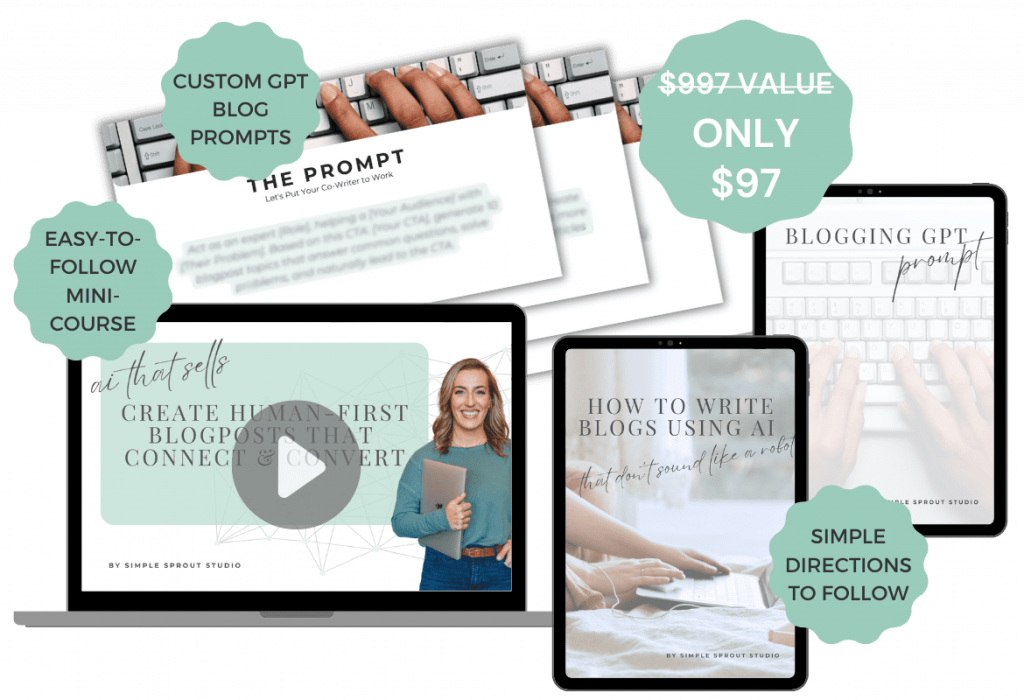
That’s the thinking behind my mini-course AI That Sells. It’s for business owners who are done juggling tactics and want a strategy-first way to create content. You’ll learn how to turn one strong idea into content that works across your channels, so AI supports your plan instead of adding more noise.
If you want to stop starting from scratch and spend more time on marketing that moves your business forward, this course shows you where to begin, without losing your voice or your edge.
You don’t need another marketing tactic just because someone says you should try it. You need a plan that connects your efforts to the goals you’re working toward. Start with your biggest priority, choose the channels that support it, and look for ways to make each piece of content do more than one job.
At simple sprout studio, we believe marketing should help you grow your business, not become another full-time job. When your strategy comes first, you can spend less time juggling disconnected tasks and more time doing the work that moves your business forward.