
How Small Businesses Lose Trust Without Realizing It Online

You might think your business looks trustworthy online. Your website is live. You have a logo. You’ve got social media accounts. Maybe you even have a handful of five-star reviews.
So why might a potential client still hesitate before reaching out? Because trust online isn’t built by one big thing; it’s built through dozens of little details. And sometimes, small businesses accidentally create doubt without realizing it.
Here are some of the most common ways it happens.
Your Website Looks Like Nobody’s Home
One of the quickest ways to lose trust is having a website that feels neglected. Maybe your last blogpost was published three years ago. Your copyright date still says 2022. Your About page mentions an old offer. Or your social media links lead to accounts you haven’t touched in months.
None of these things automatically mean your business isn’t legitimate, but your potential client doesn’t know that. They’re judging based on what they can see.
A website doesn’t need to be redesigned every year. But it should feel current enough that visitors know you’re still actively doing business.
Your Message is Confusing
People trust businesses they understand. If someone lands on your homepage and has to spend five minutes figuring out what you actually do, you’ve already created unnecessary friction.
This happens often when businesses try to speak to everyone. The copy becomes something like: “We provide innovative, customized solutions designed to empower businesses to achieve their goals.”
Okay…but what does that actually mean? Clear beats clever every time. Tell people who you help, what you help them with, and what makes your approach different. You don’t need fancy language to sound professional. In fact, simple language can make you sound more confident.

Your Content Doesn’t Match Your Expertise
You don’t need to post every day to build trust. But what you do publish should give people a reason to believe you know what you’re talking about.
If your website says you’re an expert in something, but your blog is filled with vague, surface-level content that could have been written for any business in your industry, there’s a disconnect.
Your content is an opportunity to demonstrate how you think. Answer the questions your clients actually ask. Explain confusing topics. Share your perspective. Talk about mistakes you regularly see and how people can avoid them.
You’re not giving away your business; you’re showing potential clients what it would be like to work with someone who understands their problem.
Your Reviews Are Nowhere to Be Found
You might have happy clients who would gladly recommend you. But if nobody can see that, those recommendations aren’t doing much for a new visitor. Reviews, testimonials, case studies, and client stories can help people feel more comfortable taking the next step.
And you don’t necessarily need dozens of them. A few specific testimonials are often more useful than a giant collection of “They were great!” reviews. The more detail someone shares about the problem you helped solve, the easier it is for a potential client to picture themselves getting a similar result.
You Make It Hard to Take the Next Step
Here’s a simple one that gets overlooked all the time. Someone finds your website, they like what they see, they’re interested. Now what?
If they have to hunt around for your contact information, figure out how to schedule a call, or wonder whether you’re even accepting new clients, you’ve added another opportunity for them to leave.
Your next step should be obvious: book a call, request a quote, send an inquiry, or download the guide. Whatever makes sense for your business, make it easy to find.
If You Want to Use AI in a Way That Actually Sells…
There’s a big difference between playing with AI and using AI in a way that actually drives sales and builds connections.
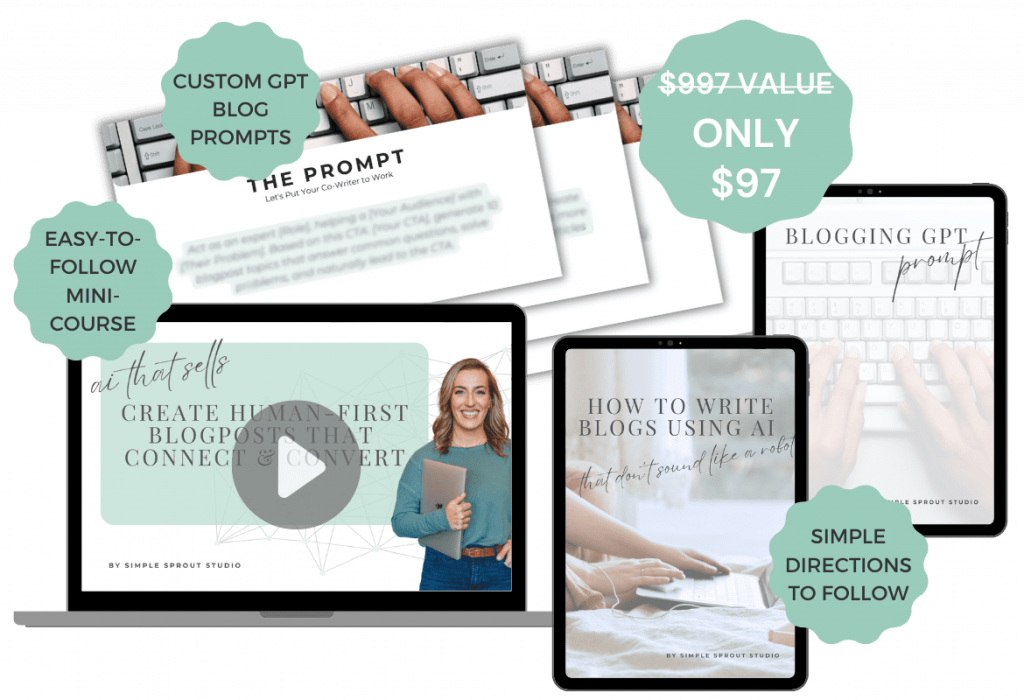
That’s why I created the mini-course AI That Sells: to help creators and business owners like you step beyond the “shortcut mindset” and start using AI strategically. This isn’t about lazy content. It’s about smart content that moves people.
If you want to work smarter, not just faster, this course walks you through how to make AI a real asset in your business – without losing your voice or your edge.
None of these things are dramatic…and that’s the point. Online trust is often lost through small inconsistencies rather than one huge mistake. An outdated page. A confusing headline. A broken link. Generic content. Missing testimonials. An unclear call to action.
Individually, these things might seem insignificant. Together, they can make your business feel less established than it actually is.
So before you decide you need a completely new marketing strategy, take a look at what you already have. Pretend you’re a potential client who has never heard of your business before.
What would you notice? Would you immediately understand what you do? Would you trust that the information is current? Would you see evidence that you know your stuff? Would you know what to do next?
Sometimes building more trust online doesn’t require doing more; it requires fixing the little things that are quietly getting in the way.
ready for more?
We’ve got you covered…and we’ll keep it simple.
Every week, we’ll pop in your inbox with awesome SEO and blogging tips made easy.